 Bufetico
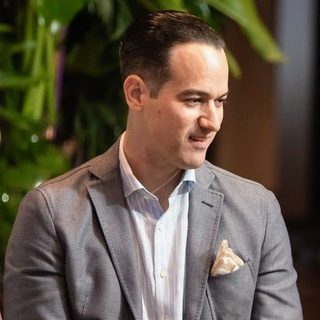
You never paid a commission, and the account still came out smaller than you expected. Ish Lukhey was 16 and working part time at a gas station when he opened his first brokerage account, under his mom’s name. He kept at it. In his first year of college, the pandemic shut down in-person classes. Stuck at his parents’ house in Minnesota, he kept trading, now with his own account at Robinhood. When Bloomberg wrote about him in June 2026, he was 23 and working as a salesman in fashion retail. He wants to trade his way toward starting his own business and buying a house.
Online, he found people who wanted the same thing. He joined r/TheRaceTo100K, a Reddit community for people chasing a $100,000 net worth, and he taught himself options from YouTube and other sites. An option is a contract that pays off if a share moves past a set price by a set date. The ones he likes are call options, the kind that pay when the price goes up, on big companies whose stock he thinks fell too far on bad news. He calls those trades his campaigns. He told Bloomberg: “In a capitalistic society, you have to buy your freedom.”
On Robinhood, a stock trade costs nothing up front, and neither does an option on a stock. Robinhood’s annual report says it was the first US retail broker to offer commission-free stock trading with no account minimum. The rest of the industry followed, it says. The app used to throw animated confetti on the screen after a user’s first trade. Bloomberg says Robinhood dropped the confetti after critics said it had turned investing into a game. Lukhey’s campaigns still cost him something. With no commission, that cost never shows up as a line of its own. The annual report explains where the money goes.
Who pays the broker
When Lukhey buys a call on Robinhood, the order goes to a market maker, a firm that buys and sells shares and options all day. The market maker pays Robinhood for sending it the order. That’s called payment for order flow. The annual report says that on options, the fee is set per contract and depends on the stock underneath. On stocks, it usually depends on the spread, which is the gap between the bid and the ask. Robinhood gets a fixed percentage of that gap when the trade goes through.
The bid is what buyers are offering right then, and the ask is what sellers want. An option has a bid and an ask too. So when he buys a call and later sells it, he crosses that gap twice, once going in and once coming out. The gap is there at every broker, with commissions or without them.
At Robinhood, the firm on the other side of the trade pays the broker, and it pays per order. The annual report lists this among its risks: customers could come to see payment for order flow as a conflict of interest between them and Robinhood. Robinhood also says it sends orders first to the market makers it believes are most likely to give its customers the best execution, meaning the best deal on the trade.
A broker that gets paid per order does better when its customers trade more. The same Bloomberg story sums up the research on people trading their own accounts: they tend to trade too often and run up high transaction costs.
The cash between campaigns
The other cost doesn’t need a trade at all. Robinhood takes the cash that customers in its sweep program leave uninvested and sends it to a network of partner banks, and the banks pay interest on it. In its quarterly report from July 30, 2026, Robinhood says it earns the difference between the rate the banks pay and the rate it gives its users. For most of the program, it can change the users’ rate when the banks’ rates move.
From April through June, the Cash Sweep line brought Robinhood $41 million. Transaction-based revenue, the money that comes from trades, was $776 million, out of $1,308 million in total net revenue. It’s mostly what market makers pay for the orders Robinhood sends them, plus commissions on event contracts and futures. Event contracts pay out depending on whether something happens, like who wins a game.
Before I look at the profit, I go to the note in the report that splits revenue by where it comes from. With a broker that says it’s free, that note shows you what customers are paying for. In Robinhood’s, options are the biggest trading line: $342 million of the $776 million.
Where this breaks
Payment for order flow can work in the buyer’s favor. Part of what Robinhood counts as good execution is price improvement, which means the trade goes through at a better price than the one on the screen. When that happens, the gap the buyer crosses gets smaller. The filings don’t break out what any one customer pays. And Lukhey is one trader. Bloomberg describes him trading options.
I go through the bid and the ask in how to read a stock quote. And revenue is at the top of the income statement.
The freedom Ish Lukhey wants to buy
Bloomberg says what Lukhey really wants is a bit vaguer than that. He also wants to retire early.
The same quarterly report has a line for stock trades. From April through June 2026, Robinhood made $129 million from them, up from $66 million in the same months of 2025. Two of the reasons the report gives are customers trading more. The average trader traded 56 percent more in dollars, and 13 percent more users placed stock trades. The other reason is less clear-cut. Market makers paid Robinhood higher rebate rates, which the company says came from the mix of stocks people traded. A rebate rate is what a market maker pays Robinhood on each order. So Robinhood made more money on each order, from the firms filling its customers’ orders, and the report doesn’t say whether that cost those customers anything.
On the options line, the rebate rates went down that quarter, and the average trader traded 43 percent more contracts.
If I were a Robinhood shareholder, I’d go to the revenue note first in every quarterly report. I’d put the options line and the stock line next to the same months a year earlier. Then I’d read the reasons the report gives for each one, like customers trading more or market makers paying different rebate rates.
To see where Robinhood stands today on the six layers I measure in every company, look it up in Bufetico.
A Robinhood trade has no commission. Part of what it costs you is the gap between the bid and the ask.
Key factsThe numbers and where they come from · 29 September 2026
- From April through June 2026, Robinhood’s total net revenue was $1,308 million, and $776 million of it was transaction-based revenue, mostly what market makers pay for routed orders (Robinhood’s quarterly report).
- Options were Robinhood’s biggest trading line in the second quarter of 2026, at $342 million. Stock trades brought in $129 million, up from $66 million a year earlier, the same report shows.
- Robinhood’s quarterly report says it earns the difference between the rate partner banks pay on customers’ uninvested cash and the rate it pays those customers. That Cash Sweep line brought in $41 million in the same quarter.
- Robinhood says in its annual report for 2025 that it was the first US retail broker to offer commission-free stock trading with no account minimum.