Parul Koul and more than 4,500 Google workers asked Sundar Pichai for layoff protections. In the quarter that ended in June, Alphabet's free cash flow went negative. A line further down the cash statement shows what Alphabet pays in cash toward the tax on its workers' stock.
Karl Ravech spent 33 years at ESPN and was let go in July. Earnings per share is one period's profit divided by the shares. At Disney it nearly halved in a quarter when its profit before tax rose.
Victor Schwartz, who runs a small wine importer in New York, beat the tariffs in court and waited almost three months for his refund. Nike booked its own $986 million tariff refund as profit before most of the cash came in, so its profit and its cash tell different stories.
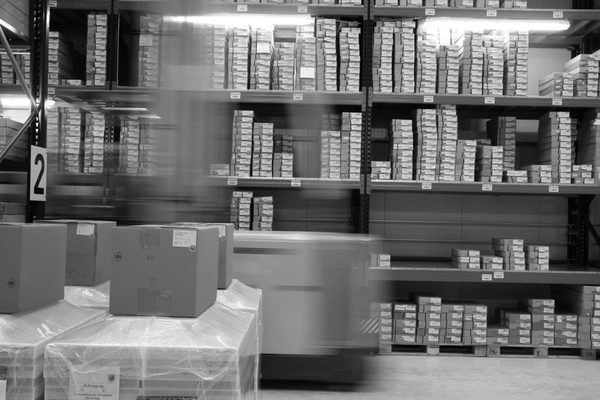
Working capital is the cash tied up in goods on the shelf and in bills customers haven't paid yet, minus the bills you haven't paid. When Saks filed for bankruptcy in January, designer Fisayo Che was out six figures, with an order sitting in her warehouse.
Dale Hemminger has been farming for 50 years and says companies like fairlife are coming back. Coca-Cola, which owns fairlife, paid out more in dividends than its business brought in two years running. Where the money came from, and why milk is half the answer.
Sam Walton's grandchildren now have a say over the biggest block of Walmart's stock, and none of it counts in the big number on the cover of its annual report. What market cap measures, and why that $391.7 billion is about half the company.
Why does a company buy back its own stock? John Ternus, Apple's CEO since September 1, inherited a buyback that cost $577,838 million in seven years and cut the share count about 22 percent in that time. Part of that money came out of savings.
Costco's CEO promised in March that its $1.50 hot dog won't go up while he's around. The income statement behind that has four different profits on one page, and the one I start with says the most.
Lexi Smith's family saved to build their home outside Abilene, Texas, and then work began across the street on an Oracle data center. Oracle has $664 billion in signed contracts, and most of it becomes revenue years from now. A dollar you wait for is worth less than one you have today.
Shaun Gamble felt the mood shift in Kalundborg, the Danish city where Novo Nordisk makes Wegovy, when Novo announced job cuts. What a stock screener can tell you about a company like that, and the four questions no column can answer.
What makes stock prices go up and down? Jon Jaffe retired as Lennar's co-CEO after 42 years. This summer Lennar delivered almost as many houses as a year earlier, earned about half as much per share, and its share price fell too, though not as far.
How to read a stock quote, told through an office worker in Seoul who saw an American fund's quote window vanish, and the ten days Korean investors traded it blind. Before the price, check when it last changed and whether anything traded.
What is a share in a company? A claim on everything a business owns, owes and earns, and the most you can lose is your slice. Sam Drevo's name is on the wildfire lawsuit against PacifiCorp, which Berkshire Hathaway owns, so one Berkshire share holds a slice of his case.
How a stock exchange works when one company trades in two places: B.Z. Tien, a vice president at TSMC, bought his company's stock in Taipei and in New York on the same day, and the same shares cost him more in New York.
Kathy Horan raced the deadline on the federal tax credit for electric cars, and so did plenty of Tesla buyers. Tesla's gross margin held near 18 percent that year. Taken apart, it shows what a good profit margin can hide.
Meta suspended Monica Montone's gym pages over an accusation she called untrue; 95 percent of her business came through Facebook. The difference between price and value at Meta: outside shares worth $857 billion, then $378 billion in a year when sales fell 1.1 percent, then about $1.6 trillion.
Nearly eight in ten McDonald's franchisees who answered a recent survey said their cash flow can't cover the reinvestment they're required to make, and the CEO says they can borrow. McDonald's borrows too, and its negative equity breaks the usual debt ratio, so I read three other things.
What a P/E ratio actually says: one price divided by one year of profit. Dan McGarry's school district now pays more than $600 a Chromebook as memory prices climb, and on a memory maker like Micron, that one year can turn the ratio upside down.
Daniel Weltz has spent 20 years at Blizzard and helped bargain his team's first union contract while its owner cut Xbox jobs. Microsoft's annual report shows how much of the deal year's growth came with the purchase, and how long part of the price keeps coming off profit.
Mike Puglisi didn't lose a hen to the bird flu that sent egg prices to a record, and by February he was losing money anyway. Why I cap growth, why I put a floor under it, and why the most damage in my own model came from where a projection starts.
Tony Barzar has rung up Costco members in Tucson for about forty years, and the company keeps about three cents of every dollar it sells. A 2.9 percent margin looks like a business barely getting by. The return on capital says why it isn't, and where that return comes from.
Arli Renacido shared a Chase account with her grandmother in the Philippines for fifteen years, then couldn't touch it for about three months. Her $44,000 is the reason cash flow can't value a bank: on JPMorgan's books, what moves is the customers' money.
The Builders FirstSource store in Newport, Oregon, closed on June 12 with 18 people working there. The same half-year shows a $51 million loss and $155 million of cash from operations, and most of that cash came from suppliers waiting to be paid.

Tim Johns runs operations at the Simpson Strong-Tie plant that opened in Gallatin, Tennessee, in January with 227 people. The parent, Simpson Manufacturing, grew its profit eleven years out of twelve while its operating cash fell twice. The gap was steel on the shelves.
Baristas shut a Starbucks in Goodlettsville, Tennessee, for a day over staffing. Starbucks negative equity of minus $7,674 million and $7,884 million of leases are two numbers of almost the same size pointing opposite ways, and the rent paid on that store is on neither line.
The people who build roof trusses at a plant in Stockton, California, lose their jobs in October. How to tell a cyclical company from one that is shrinking: the profit line can't, so I read the cash from operations as a second witness, on two real companies above that plant in the chain.
Shareholders' equity rose by $646 million in a half-year the company spent losing money, without issuing a single new share. The biggest reason has nothing to do with airplanes.
Every other valuation I could find said the opposite of what my screen said about Amazon. One of us had to be wrong, and it turned out to be me: I was treating every dollar a company invested as a dollar it had lost, which makes a business that's building look just like one that's bleeding.

The company that owns Zara reported first-half sales this morning and gave two growth figures a paragraph apart. Only one of them was audited. The number I write down is the gap between them.
A bank in Buenos Aires came out of my model worth a small fraction of its $44.20 price. What I'd found was my own growth cap doing the work, and 105 companies now get no valuation at all because of it.

Amazon just reported $5.75 a share against an expected $1.81, and free cash flow of minus $7.6 billion. Both are true, and each one on its own leads you the wrong way. Which numbers to read, and in what order.
Etsy's shareholders' equity is about minus $1.1 billion. Divide debt by that and you get a number that describes nothing, so the square stays gray. What a gray square means, and where I look instead.
Sort thirty thousand companies by how cheap they look and the top of the list is 4,041 companies that had stopped trading, plus 505 preferred shares carrying their parent's accounts. The errors pile up exactly where you look first.
In 2021 the Japanese ten-year paid 0.05% and the American one 1.52%. Put the American rate under a company that earns yen and you've changed the question without noticing. Toyota is the clean case.
A lot of valuation tools use today's price to work out what a stock should be worth. So whatever has already gone up comes out looking good, and the model just agrees with the market.
Measured first to last, Amazon's cash said the company was shrinking more than 20% a year. The median of the same series said +19.7%. Same data, two questions, and only one of them is worth asking.
Nothing matches. Try another word.
← Bufetico Bufetico